

Nothing is what it looks like
It has been said that things are only what they look like

It is a human tendency want to jump to solutions. Sometimes a different approach may help you to more effectively to do the work you need to do. But to figure that out, you need to take a step back, and first think what is the best way to solve the issue.
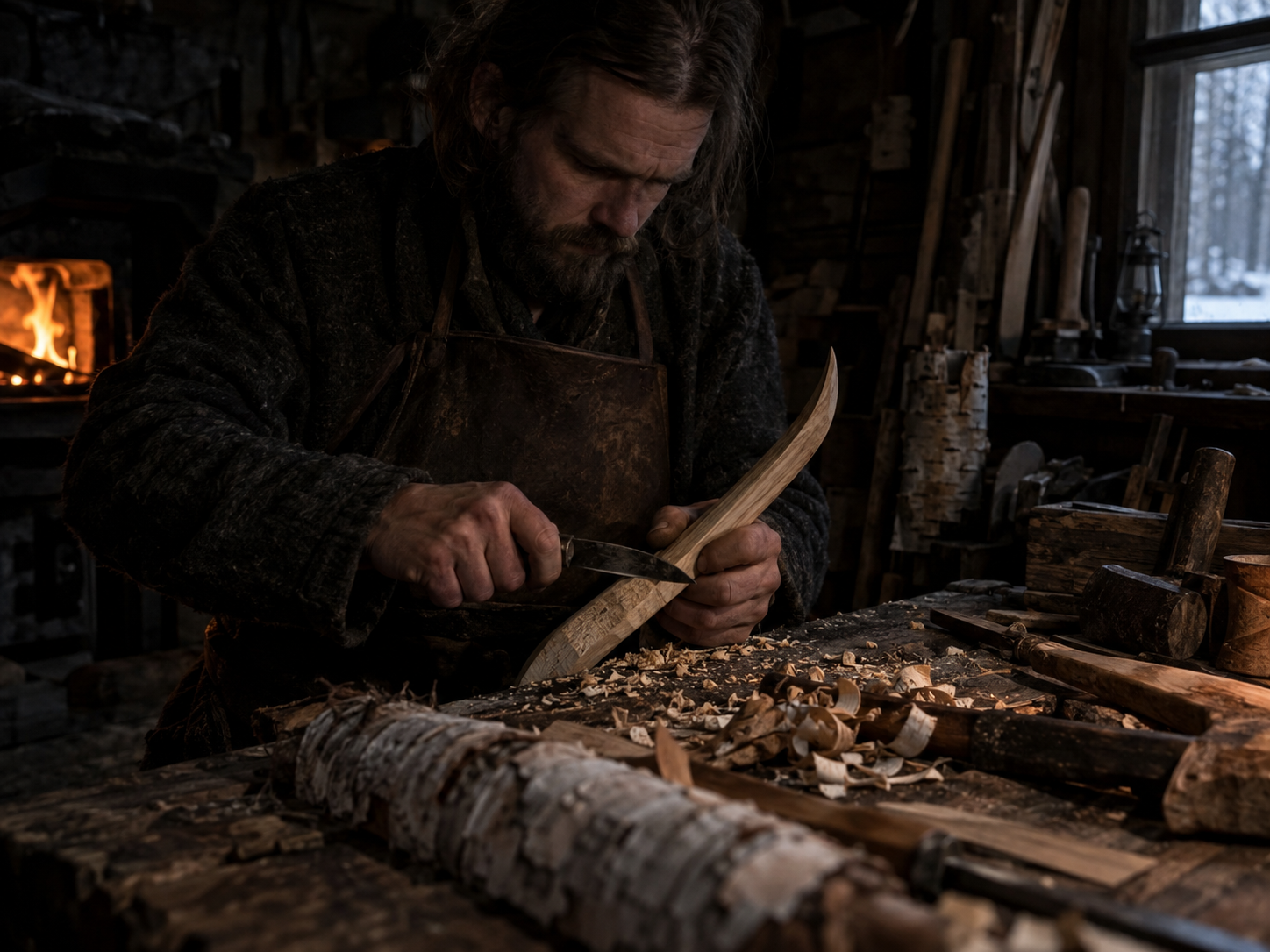
In Finland, lusa was a traditional tool used to seperate phloem (fin. nila) and cambium (fin. jälsi) layers on pine tree inner bark, so you could create pine bark flour. Pine bark flour (fin. pettu) was added to bread during the times of scarcity. Lusa was carved from wood. Later, lusa was also used to talk about any tool that you carve from wood specifically for the purpose.
In lusa-oriented development, you first envision and create the tool for doing the work, and then complete the work using that tool.
Lisp is especially well suited for this kind of purpose. You often invent some form of domain-specific language (DSL) that you can solve the problem with, fix the problem using that language, and only then implement the DSL.
During AI age, I find myself often approaching problems with lusa orientation, as the cost difference between generic and one-off solutions is narrowing. I often start by envisioning a tool that would solve my problem, just more more generally, and then implement that tool. Then I use the tool to solve my problem. Often, I give it a name and reserve a domain name as well.
If you need consulting related to system architectures in general, or LLMs or data integrations in particular, please do not hesitate to contact Mikko Ahonen through the contact page.
It has been said that things are only what they look like